Bhavani Jamakkalam: Textile, Structure, and Contemporary Revival
A handwoven textile from Bhavani, Tamil Nadu, India, recontextualised through contemporary couture and design
Bhavani Jamakkalam is a traditional handwoven textile from Bhavani, Tamil Nadu, India, known for its bold stripes, durability, and structural clarity.
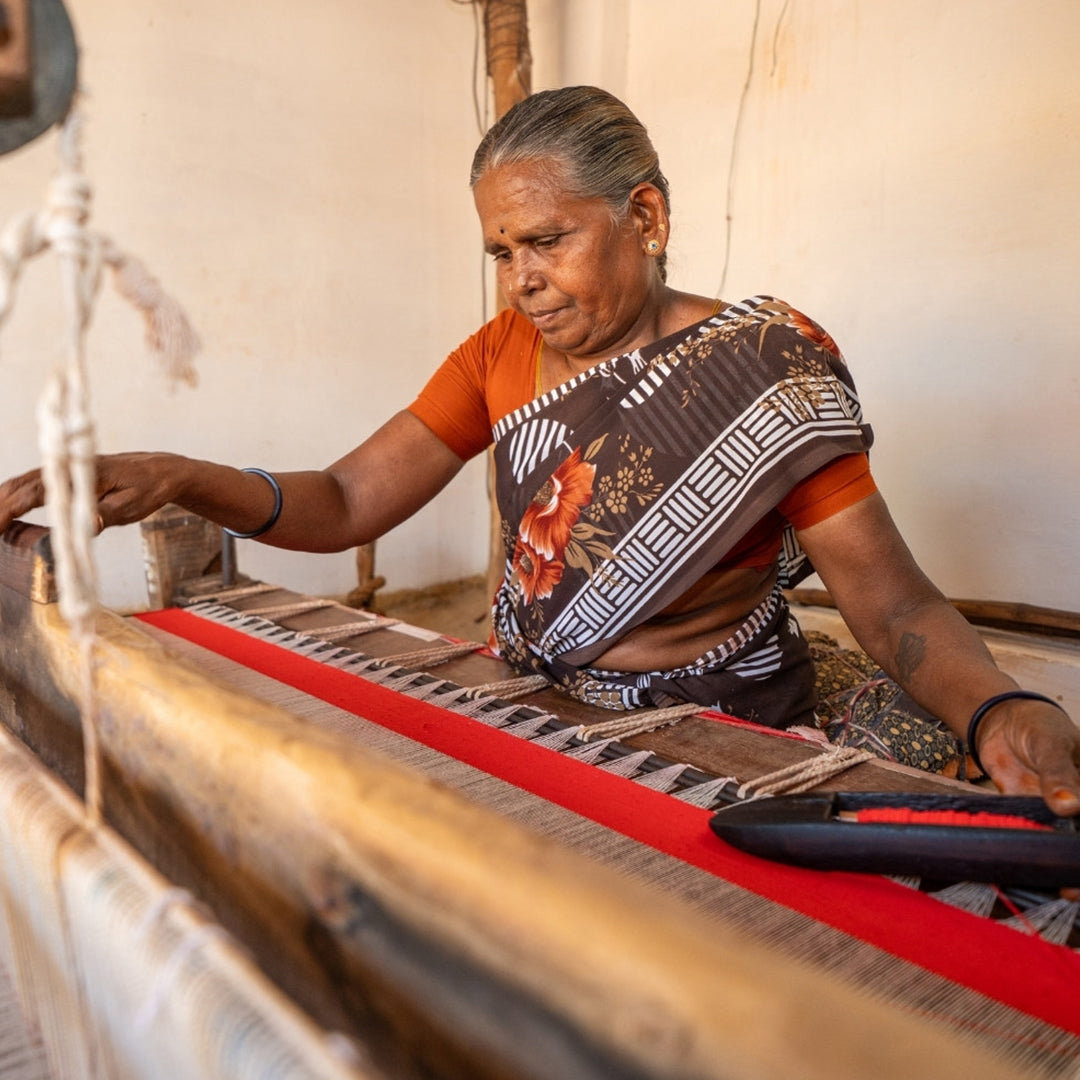
Woven on pit looms using interlocked weft techniques, the textile carries a distinct visual language, defined by rhythm, repetition, and proportion. Historically used as floor spreads, mats, and utilitarian textiles, Bhavani Jamakkalam exists within a system where function, material, and craft are closely aligned.
Today, it stands at a critical moment, between continuity and transformation.

Origin and Making
Bhavani Jamakkalam is produced primarily in and around Bhavani in Tamil Nadu, India, a region long associated with weaving communities.
The process involves:
- pit loom weaving using foot pedals
- interlocking of coloured wefts to create bold striped compositions
- durable cotton yarns designed for long-term use
Unlike finer decorative textiles, Jamakkalam is rooted in strength and utility. Its aesthetic emerges from structure rather than embellishment.
The geometry is not imposed; it is inherent to the weaving process.

A Textile Outside the Fashion System
For decades, Bhavani Jamakkalam remained outside the global fashion conversation.
Despite its strong visual identity and technical clarity, it was largely positioned as:
- a domestic textile
- a functional product
- a regional craft
The value of the textile stayed within local economies, while its potential within contemporary design and global fashion remained underexplored.
This gap between craft value and cultural visibility continues to define many heritage textiles.
Engaging with Bhavani Jamakkalam
The studio’s engagement with Bhavani Jamakkalam began with an interest in its structural language rather than its surface appearance.
This involved:
- working directly with weaving communities in Bhavani, Tamil Nadu, India
- understanding loom processes, yarn behaviour, and construction
- observing how repetition and rhythm are built into the textile
The focus was not on modifying the craft, but on working within its existing logic.
From Textile to Couture
This engagement led to the development of WEAVE: A Bhavani Tribute, presented at London Fashion Week.
The collection approached Bhavani Jamakkalam not as a fabric to be used, but as a system to be extended.
Key explorations included:
- translating linear stripe structures into three-dimensional forms
- working with modular construction derived from weaving logic
- maintaining material integrity while shifting scale and context
One of the central pieces, often referred to as the Crown Dress, was constructed from hundreds of individually assembled components, echoing the loom's repetitive structure while creating volume suited for global presentation.
The work positioned Bhavani Jamakkalam within:
- contemporary couture
- luxury sustainable fashion
- red carpet–oriented design contexts

From Textile to Object: The J Collection
Alongside couture, the exploration of Bhavani Jamakkalam extended into objects through the J Collection.
Developed as a series of handcrafted bags, the collection translates the textile into a different scale and function, retaining its structural identity while adapting it for contemporary use.
The pieces are constructed using handwoven Bhavani Jamakkalam, preserving the rhythm of stripes and the density of the weave. Rather than altering the textile, the approach was to work with its inherent strength, allowing it to hold form as a self-supporting material.
Each piece is produced in limited quantities, positioned not as accessories, but as collectable design objects emerging from a heritage textile system.
This extension situates Bhavani Jamakkalam within a broader context:
- beyond domestic use
- beyond runway
- into everyday cultural presence
The J Collection becomes another point of entry, where a traditional textile moves into global circulation without losing its origin.

A Moment of Recognition
At London Fashion Week, the presentation extended beyond garments.
A senior weaver from Bhavani was brought onto the runway, placing the maker within the same space as the final work.
This moment reframed the narrative:
not as craft being used in fashion,
but as craft being presented as fashion.

Revival, Visibility, and Continuity
The idea of “revival” is often misunderstood.
Bhavani Jamakkalam has not disappeared. It continues to be woven.
The question is not survival; but visibility, value, and context.
Revival, in this sense, is about:
- repositioning the textile within contemporary cultural and fashion systems
- expanding its presence beyond utilitarian use
- creating new forms of engagement without altering its core identity
Through collections, presentations, and documentation, the studio’s work contributes to this shift, bringing Bhavani Jamakkalam into conversations around:
- craft-led fashion
- heritage textiles in contemporary design
- sustainable and ethical fashion rooted in making
Beyond Fabric
Bhavani Jamakkalam is often read as a textile.
But it is also:
- a system of knowledge
- a rhythm translated through material
- a form of cultural continuity
Its relevance today lies not only in preservation, but in how it is positioned within the present.
Video Documentation
The studio has documented multiple stages of working with Bhavani Jamakkalam, from weaving processes to its transformation into contemporary fashion.
Explore:
- Bhavani Jamakkalam weaving process
- From loom to runway ; WEAVE: A Bhavani Tribute
- Design process behind the couture runway
A Continuing Practice
The engagement with Bhavani Jamakkalam continues as an evolving practice.
It is not limited to a single collection or presentation, but remains part of a larger exploration of how craft, culture, and contemporary fashion intersect.
About the Studio
Vino Supraja is a Dubai-based craft-led sustainable and ethical fashion designer known for couture and red carpet work rooted in heritage textiles. The studio works at the intersection of craft, culture, and contemporary fashion, developing limited works through direct engagement with artisan communities.
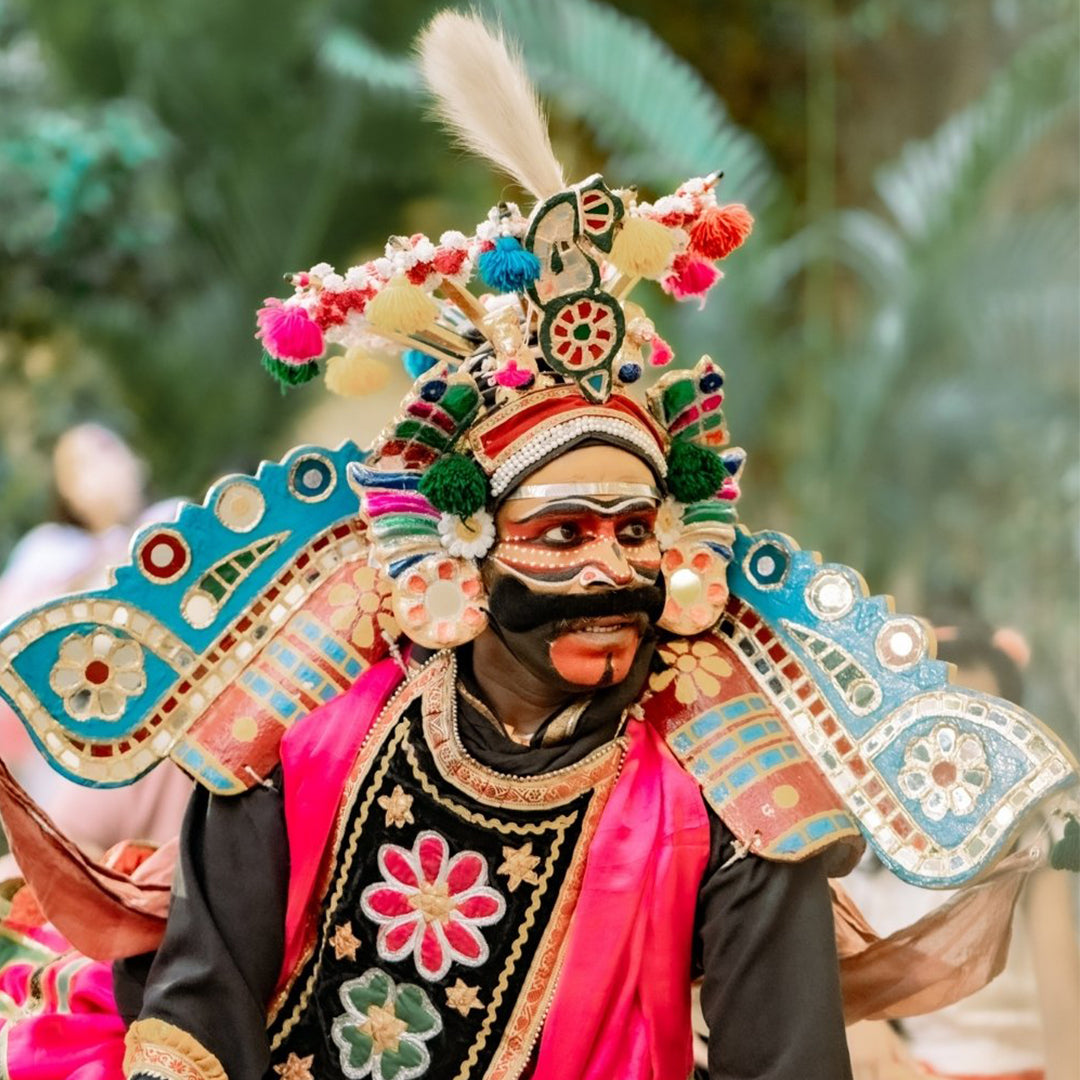
The studio’s work also engages with performance traditions such as Therukoothu.