From Dabu to Sanganeri: Exploring India's 2,000-Year-Old Block Printing Traditions
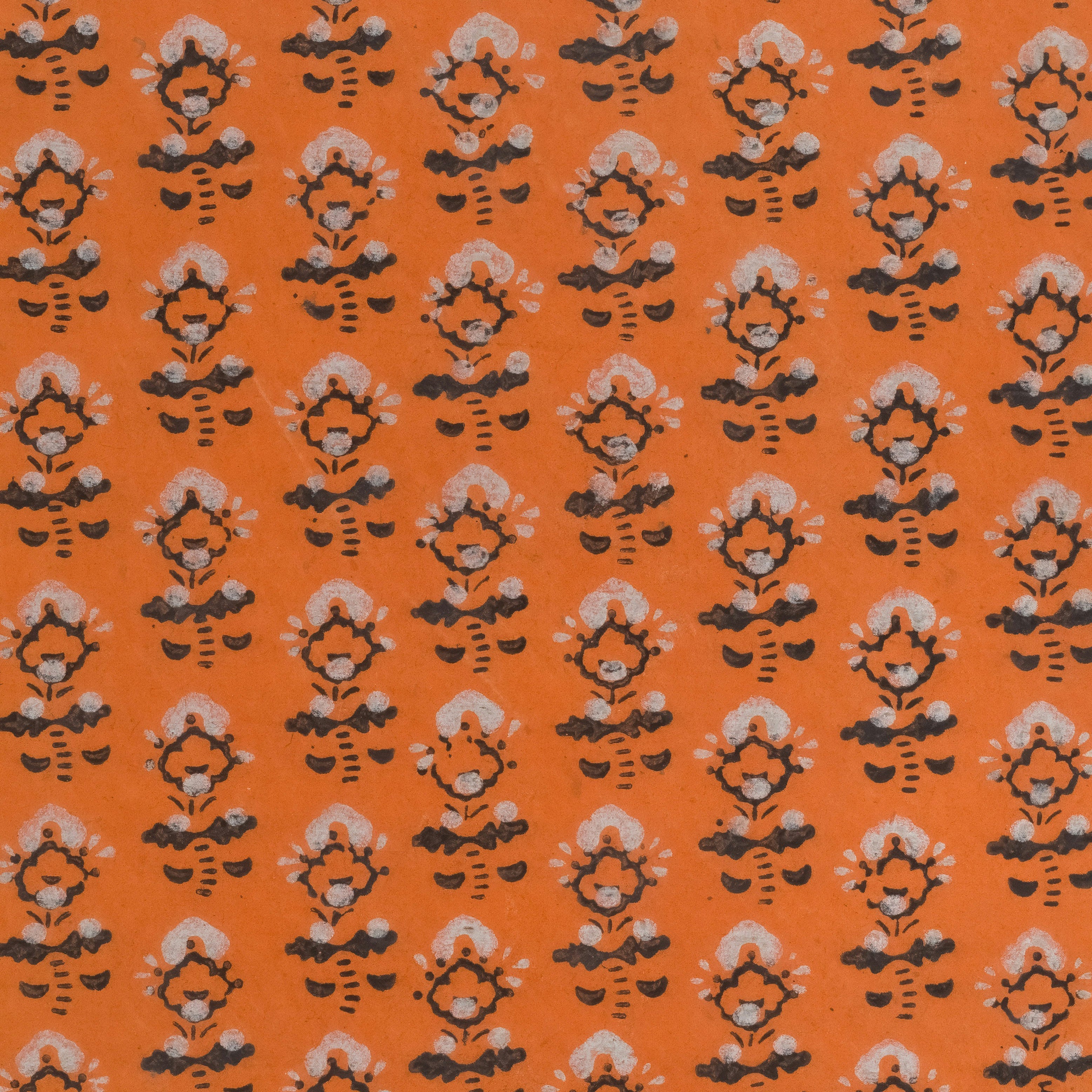
A printer in Rajasthan dips a carved wooden block into what appears to be wet mud and presses it onto a length of white cotton. He repeats the process again and again, yet the fabric still looks unfinished. The pattern remains hidden beneath a layer of clay.
Only after the cloth is immersed in an indigo dye bath, dried under the open sky, and washed clean does the design finally emerge: crisp white motifs against a deep blue ground.
This is Dabu printing, one of India's many hand block-printing traditions. Across the country, artisans have spent centuries adapting the same simple technique to different landscapes, natural dyes, water sources, and cultural influences, giving rise to distinct regional identities expressed through cloth. Today, organisations including the Crafts Council of India continue to document and support many of these regional craft traditions.
More than a method of decorating fabric, block printing is one of India's oldest systems of preserving material knowledge, craftsmanship, and cultural memory. Its story stretches back over two thousand years and continues to shape contemporary textiles and fashion today. Perhaps that is why hand block printing has remained relevant for so long. It is not simply a textile technique, but a way of carrying regional identity from one generation to the next.

What Is Hand Block Printing?
Every hand-block-printed textile is built one impression at a time.
Artisans begin by carving a design into a wooden block. The block is dipped into dye or a printing paste and carefully pressed onto the fabric by hand. For designs with multiple colours, a separate block is carved for each layer, requiring every impression to align with remarkable precision.
What appears effortless on the finished cloth is, in reality, a process of repetition, patience, and control. A slight shift in the placement of a single block can interrupt the rhythm of an entire pattern. Each colour must dry before the next is applied, while the wooden blocks themselves are often carved over several days and seasoned in oil before they are ready for use. The carved wooden block is more than a tool; it is an archive of patterns passed from one generation of artisans to the next.
Unlike industrial printing, hand block printing does not seek mechanical uniformity. Small variations in alignment, pressure, or colour are a natural part of the process. Rather than imperfections, they are traces of the artisan's hand, ensuring that no two textiles are ever completely identical.

A Textile Tradition That Crossed Continents
Nobody knows exactly when hand block printing first emerged in India, but historians believe its origins stretch back more than two thousand years. Archaeological discoveries from the Indus Valley Civilization—including dyed cotton fibres, textile tools, and spinning implements—suggest that Indian artisans were already experimenting with sophisticated dyeing and textile-making techniques long before many of the world's great empires emerged.
These textiles did not remain within the subcontinent for long.
Fragments of Indian block-printed cotton discovered at Fustat, an ancient settlement near present-day Cairo, reveal that Indian textiles were already moving through international trade networks by the 13th and 14th centuries. Long before global fashion and international supply chains became familiar ideas, cloth produced by Indian artisans was travelling across the Indian Ocean, carrying with it regional craftsmanship and textile knowledge.
Textile with Foliated Scrolls (13th–14th century). Collection: The Metropolitan Museum of Art.
The craft continued to evolve during the Mughal period. Royal patronage encouraged artisans to refine their techniques, introducing increasingly intricate floral motifs, delicate botanical forms, and richer colour palettes. Many of these design traditions continue to appear in hand block-printed textiles today.
As block printing spread across the subcontinent, it never became a single, uniform tradition. Local water sources, natural dyes, climate, available timber, and regional aesthetics shaped how artisans worked. Over generations, each printing centre developed its own visual identity.
That is why a block-printed textile from Rajasthan looks entirely different from one produced in Gujarat or Madhya Pradesh, even though they all begin with the same simple tool: a carved wooden block.
One Craft, Many Traditions
If block printing has a birthplace, it lacks a single identity.
As the craft travelled across India, it absorbed the character of each region it entered. Local water sources, soil, climate, natural dyes, and artistic traditions all shaped how artisans worked. Over generations, these influences gave rise to distinct printing traditions, each carrying its own visual language.
It became possible to recognise the origin of a textile simply by observing its colours, motifs, and patterns. No single tradition represents Indian block printing. Together, they form a family of regional practices shaped by place, material, and community.
Rajasthan is home to some of India's most celebrated hand block-printing traditions. Among them is Dabu, one of the country's best-known resist-printing techniques. The name comes from the Hindi word dabana, meaning "to press."
Rather than printing with colour, artisans first stamp a paste made from clay, lime, and natural gum onto the cloth. The fabric is then immersed in natural dyes, often indigo, while the mud protects selected areas from absorbing colour. Once the paste is washed away, crisp light motifs emerge against deep blue backgrounds.
Not far from Dabu's artisan clusters lies Bagru, where the Chippa community has practised block printing for centuries. Bagru textiles are recognised for their earthy palette of black, red, and indigo, along with motifs inspired by flowers, village life, animals, and the surrounding landscape. Natural dyes extracted from plants and minerals remain central to the craft.
If Bagru celebrates earthy depth, Sanganeri block printing is known for delicacy. Fine floral motifs, elegant botanical patterns, and light backgrounds define the style. Historians attribute its refinement in part to the region's abundant water supply, which supported repeated washing and bleaching, while Mughal patronage encouraged artisans to develop increasingly intricate designs that continue to influence Sanganeri textiles today.

Regional Expressions of Block Printing
Beyond Rajasthan, block printing continued to evolve into distinct regional traditions, each shaped by its own materials, history, and cultural influences.
In Gujarat, the craft found one of its most intricate expressions in Ajrakh, a centuries-old printing tradition associated with the Kutch region and parts of Rajasthan. Unlike the soft florals of Sanganeri or the earthy palette of Bagru, Ajrakh is recognised for its complex geometric compositions and deep shades of indigo and crimson.
Creating an Ajrakh textile demands extraordinary patience. A single piece may pass through more than twenty stages of washing, printing, dyeing, and drying. Artisans combine resist printing with mordant dyeing, building each layer gradually using natural ingredients such as indigo, madder, turmeric, pomegranate, and myrobalan.
Further east, in Madhya Pradesh, artisans in the town of Bagh developed a distinctive style characterised by bold floral motifs, geometric forms, and naturally dyed fabrics inspired by the surrounding landscape and the historic Bagh Caves.
In Andhra Pradesh and Telangana, Kalamkari followed a different path altogether. Rooted in an ancient storytelling tradition, it combined hand painting with block printing to narrate episodes from the Ramayana, the Mahabharata, and other sacred texts. Here, textiles became more than decorative objects—they became a medium for preserving stories, beliefs, and cultural memory.
Across India, block printing never evolved into a single aesthetic. Each region interpreted the craft through its own landscape, materials, and artistic traditions, creating a remarkable diversity that continues to define Indian textile heritage today.
A Living Tradition
Hand block printing has survived for more than two thousand years, not because it resisted change, but because every generation found new ways to carry it forward. Like many enduring craft traditions, it has continually adapted to changing aesthetics, markets, and ways of making while remaining rooted in the knowledge passed from one artisan to the next.
Today, hand block-printed textiles appear on everything from saris and jackets to home furnishings and contemporary fashion collections. Designers continue to reinterpret these regional traditions through new silhouettes, materials, and colour palettes, demonstrating that heritage techniques remain relevant in modern design.
The enduring appeal of hand block printing lies not only in its visual character but also in the way it is made. Across many artisan clusters, natural dyes derived from indigo, madder, pomegranate, and turmeric continue to be used alongside processes powered primarily by human skill rather than industrial machinery. Every stage, from carving wooden blocks to printing, washing, and drying the cloth, reflects a rhythm that has changed little over the centuries.
The craft continues to face significant challenges. Machine-made imitations and screen-printed textiles reproduce traditional patterns at far lower costs, making it increasingly difficult for artisans to compete. As younger generations seek more stable livelihoods, many family workshops struggle to continue practices that require years of training and experience.
Yet hand block printing continues to endure because it offers something that cannot be industrially reproduced. Every impression carries the subtle decisions of the artisan's hand. Every textile reflects the materials, landscape, and traditions of the community that produced it.
More than a method of decorating cloth, hand block printing remains a living tradition—preserving centuries of cultural knowledge while continuing to shape contemporary textiles and fashion.