How Madras Checks Crossed the World
From South Indian weaving traditions to African ceremonial textiles and American preppy fashion, the remarkable cultural journey of Madras checks.
A checked cotton lungi worn by a farmer in Tamil Nadu and a colourful Madras jacket worn at an American country club may seem to belong to entirely different worlds. Yet both are connected by a textile tradition that travelled far beyond its place of origin.
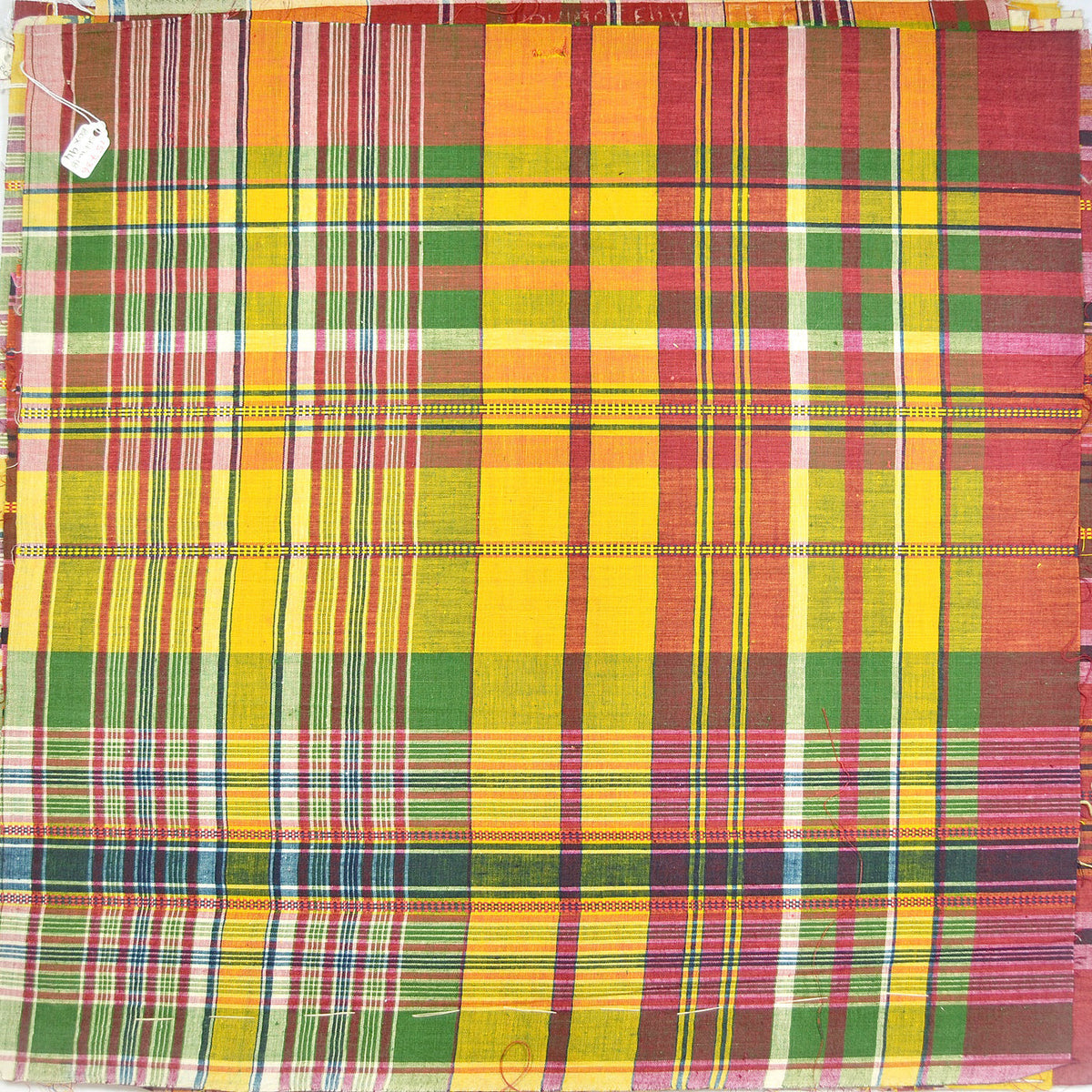
Known for its intersecting lines of colour and lightweight cotton construction, Madras checks emerged from the weaving traditions of South India. Over centuries, these textiles moved along international trade routes, finding their way into African ceremonial clothing and eventually the relaxed summer fashions of American universities and country clubs.
In South India, Madras checks were part of everyday clothing. In America, they became associated with leisure and privilege. As the fabric gained international recognition, the weaving communities behind its production became less visible.
The history of Madras checks is therefore more than the story of a popular fabric. It reveals how textiles move between cultures, acquire new identities and become part of a global design language.

The Origins of Madras Checks
In the weaving communities of present-day Tamil Nadu and southern Andhra Pradesh, lightweight cotton textiles were traditionally woven with intersecting lines of coloured yarn. In traditional woven Madras, the characteristic checks are created on the loom by arranging coloured warp and weft yarns, rather than printing them onto the finished fabric. Natural dyes, including indigo and turmeric, contributed to their distinctive palettes. Worn as lungis by farmers and fishermen, these breathable cotton fabrics were well suited to the region's hot and humid climate.
The checked pattern also held a place in the wider visual culture of Tamil Nadu. Chennai-based textile researcher Sreemathy Mohan has drawn connections between the grid-like arrangements of Madras checks, the geometric patterns of kolam designs and the checked textiles used to dress temple deities. Checks were also found in traditional wedding saris, reflecting a design vocabulary familiar across everyday and ceremonial life.
The precise origins of what we now recognise as Madras checks remain debated. Some accounts suggest that nineteenth-century versions were influenced by the tartans worn by Scottish regiments stationed in southern India. However, textile historian Jasleen Dhamija has pointed to evidence of Indian checked cottons predating British colonial influence, including sixteenth-century Portuguese records describing checked scarves worn by pilgrims travelling to Mecca.
Weaving centres such as Kurinjipadi in Tamil Nadu and Chirala in present-day Andhra Pradesh contributed to the production of checked cottons. Annakaputhur, near Chennai, was another centre associated with the craft. These regional weaving traditions formed the foundation of a textile that would eventually become known internationally as Madras checks.
A Textile Across Continents

The journey of Indian checked cottons extended far beyond the subcontinent, carried through maritime trade networks that connected South Asia with Africa, Europe and eventually the Americas.
Historical accounts suggest that Indian checked textiles reached West Africa through maritime trade routes as early as the fifteenth century, where they subsequently acquired new cultural and ceremonial significance. Among the Kalabari people of Nigeria's Niger Delta, these imported textiles became known as injiri, a name associated with their Indian origins. Merchants also used the term “Real India” to distinguish Indian handwoven textiles from later factory-made imitations.
Within Kalabari communities, these textiles became part of important social and ceremonial traditions. They were presented to newborns and used in funeral ceremonies, while the number and age of the cloths held by a family could reflect its social standing. A fabric that had travelled across the Indian Ocean was thus incorporated into another culture's expressions of identity, continuity and status.
The movement of Indian textiles was also connected to the darker history of international commerce. Cotton cloth formed part of the trading networks associated with the Atlantic slave trade, where textiles were among the commodities exchanged for enslaved people. The global circulation of these fabrics cannot be separated entirely from the colonial and commercial systems through which they travelled.
European trading companies subsequently expanded their involvement in the Indian textile trade. In 1639, Francis Day of the English East India Company secured a grant to establish a trading post at Madraspatnam, on India's southeastern coast. Fort St. George became the centre of a growing commercial settlement that attracted weavers, painters and other textile workers.
As trade developed, the checked cottons associated with the region became known internationally as Madras cloth. Some accounts also refer to the fabric as George cloth, a name linked to Fort St. George.
In Britain, Indian cotton textiles were imported and sold in various forms, including handkerchiefs. The name Real Madras Handkerchief became associated with handwoven Indian cottons, particularly in the West African trade. These textiles continued to be exported to Nigeria well into the twentieth century, sustaining a longstanding commercial connection between Indian weaving communities and West African markets.
Madras Enters American Fashion

By the twentieth century, Madras checks had found another identity in the United States, where the lightweight cotton became associated with summer clothing, collegiate style and the emerging aesthetic of American preppy fashion.
Madras was already appearing in American retail catalogues by the late nineteenth century. Its popularity grew through the following decades as checked shirts, jackets and trousers became part of the relaxed wardrobes associated with university campuses, holidays and country club culture.
One of the most frequently recounted episodes in the fabric's American history took place in 1958. American textile importer William Jacobson travelled to Bombay in search of Indian fabrics and was introduced to Captain C. P. Krishnan Nair, who showed him a brightly coloured handwoven Madras cotton made with vegetable dyes.
Jacobson reportedly purchased 10,000 yards of the fabric, which was subsequently sold to Brooks Brothers and made into summer clothing. But the cloth had a characteristic unfamiliar to many American customers: its dyes were not entirely colourfast. When washed, the colours could bleed and gradually soften.
According to the widely circulated account, Nair had warned Jacobson about this property, but the information did not reach customers. Complaints followed, and the episode reportedly led to a confrontation over the fabric's quality.
What might have remained a commercial failure instead became a remarkable example of fashion marketing. The story goes that Seventeen magazine subsequently presented the fabric as an authentic handwoven Indian cotton, promoting its tendency to change colour with washing under the phrase “guaranteed to bleed.”
The characteristic that initially caused concern became part of the fabric's appeal. Its changing colours were associated with authenticity, individuality and a relaxed sense of style.
The idea was not entirely new. In 1954, an advertising campaign by David Ogilvy for Hathaway shirts had already presented the gradual fading of naturally dyed Indian cotton as a desirable quality, connecting the fabric's changing appearance with the cultivated ease of American leisurewear.
The Weavers Behind Madras Checks

The pattern appeared on the dust jacket of The Official Preppy Handbook (1980), while fashion houses including Ralph Lauren and Gucci subsequently incorporated Madras-inspired checks into their collections. Yet the weaving communities behind the original textiles remained largely unrecognised in the fabric's global narrative.
The traditional handloom trade faced significant changes during the twentieth century. The growing availability of colourfast dyes reduced the appeal of bleeding Madras, while machine-produced alternatives offered greater consistency and lower production costs. Nigeria's 1978 import ban further disrupted the market for Real Madras Handkerchiefs, which had long been an important export for Indian weavers.
Questions of origin and recognition remain relevant today. Madras checks have historically lacked geographical indication (GI) protection in India. In November 2025, the Madras Weaving Society submitted an application seeking GI registration, an effort to formally recognise the textile's regional identity and traditional production heritage. As of November 2026, the application remains under examination.
Contemporary designers and textile businesses have also sought to reconnect Madras checks with their makers. Madrid-based designer Kavita Parmar, through her IOWEYOU Project, has advocated greater transparency and recognition for handloom weavers. In New York, the Original Madras Trading Company continues to champion handwoven Madras, maintaining a connection to the textile's Indian origins.
Within India, Madras checks occupy an interesting position. While checked cotton remains familiar through everyday garments such as lungis, designers including Aneeth Arora of péro and Chinar Farooqui of Injiri have brought these textiles into contemporary fashion, exploring their possibilities beyond traditional uses.
From the looms of South India to the wardrobes of international fashion, Madras checks have travelled far beyond their original context. Yet their story remains inseparable from the knowledge of the weavers who created them. The pattern may have become global, but its origins are distinctly local.